The Elephant Grace: A Tribute to the Divine Architect of Beginnings
In the pantheon of the sublime, few figures command a room—or a soul—quite like Lord Ganesha. He is the golden intersection of the earthly and the ethereal, a deity whose presence is felt in the hushed silence before a Great Endeavor and the celebratory roar of a finished triumph.
To tell the story of Ganesha is not merely to recount a myth; it is to explore the very blueprint of spiritual resilience and intellectual elegance.
The Divine Genesis: Beauty from the Earth
The story begins in the private sanctum of Goddess Parvati. In an act of profound creative will, she fashioned a son from the turmeric paste of her own body, breathing life into form. This was the birth of pure devotion—a guardian created to protect the sacred space of the Divine Mother.
The luxury of Ganesha’s origin lies in this intimacy: he was not born of chance, but of intention. When he stood at the threshold, refusing entry even to Lord Shiva, he represented the ultimate boundary—the ego's first encounter with the Infinite.
The Great Transformation: The Alchemy of Ego
The most iconic chapter of his legend is, paradoxically, one of destruction and rebirth. In a celestial clash of misunderstanding and duty, Shiva severed the boy’s head. Yet, in the realm of the divine, an ending is simply a transition to a more sophisticated form.
By replacing the head with that of an elephant, Shiva didn't just restore life; he bestowed Supra-consciousness.
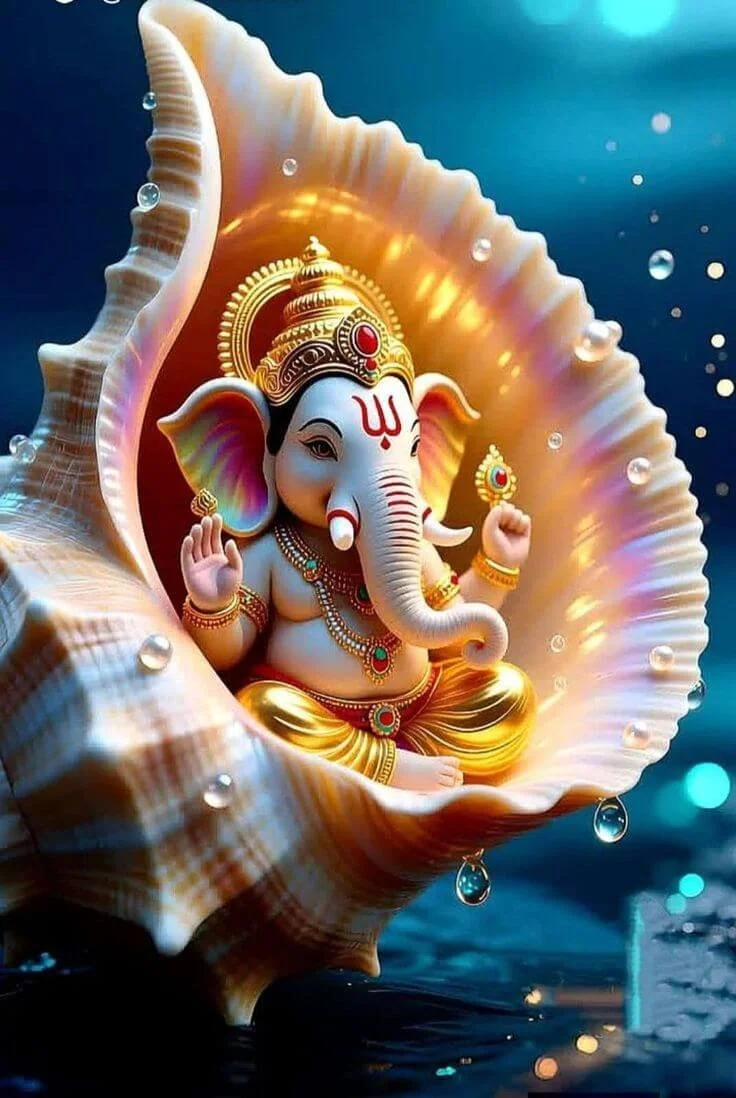
The Large Ears: To listen more than one speaks—the true mark of a leader.
The Small Eyes: Sharp, focused, and capable of seeing the microscopic details within the macroscopic universe.
The Trunk: An instrument of incredible versatility, strong enough to uproot trees yet delicate enough to pick up a single needle.
The Scribe of Eternity
Beyond the physical, Ganesha is the patron of the arts and the intellect. When the sage Vyasa sought to dictate the Mahabharata, it was Ganesha who stepped forward as the scribe.
In a moment of sheer aesthetic sacrifice, when his stylus broke, he snapped off his own tusk to continue writing. This "Ekadanta" (One-Tusked) form serves as a timeless reminder: True creation requires sacrifice, and perfection is often found in our imperfections.
The Aesthetic of the Threshold
In modern spiritual practice, Ganesha remains the Vighnaharta—the Remover of Obstacles. He sits at the doorway of every new house, every new business, and every new heartbeat.
To honor Ganesha is to embrace the sleekness of the soul. It is to move through the world with his "Lambodara" (large belly), which signifies the ability to digest all experiences—the bitter and the sweet—with equal grace.
A Legacy in Gold and Vermillion
We pay tribute to the Lord of Beginnings not just as a figure of worship, but as an icon of spiritual luxury. He teaches us that the greatest wealth is wisdom, and the highest form of power is the gentleness to use it wisely.
As the incense rises and the bells chime, we recognize that Ganesha is not just a story from the past. He is the quiet confidence within us that says: Begin. The way is open.
"In his curve, there is the universe. In his stillness, there is the dance of all creation."