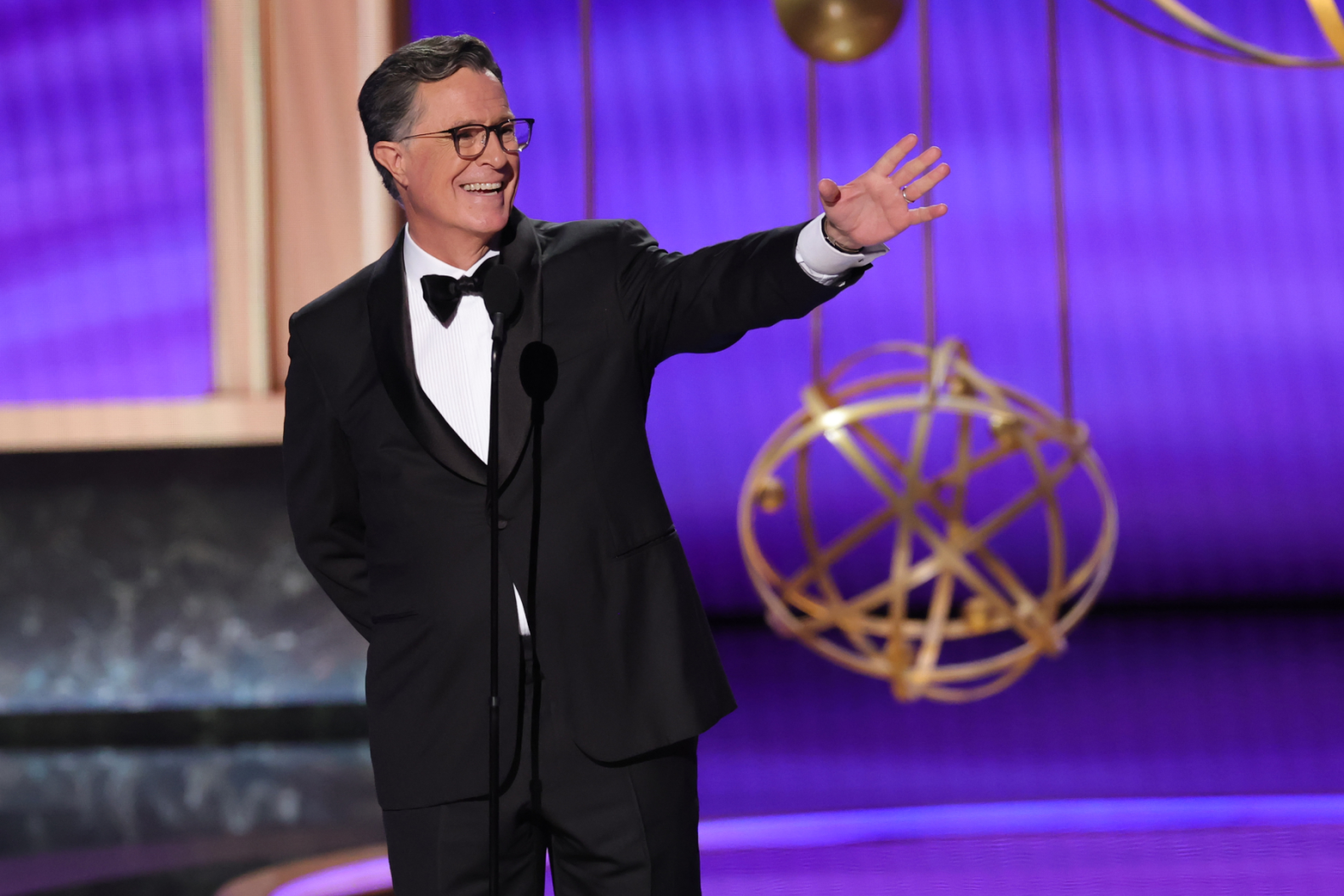
By Publisher Ray Carmen
When Time magazine places a comedian on its cover, the world should pay attention.
When that comedian is Stephen Colbert, the message is unmistakable: satire has become one of the most powerful voices of our age.
In an era shaped by political upheaval, media fragmentation, and a growing distrust of traditional authority, Colbert stands not merely as an entertainer, but as a cultural compass — sharp, unflinching, and relentlessly intelligent.
From Comedy to Conscience
Colbert’s journey from The Daily Show and The Colbert Report to the throne of The Late Show is more than a career arc — it is a reflection of America’s shifting soul. His brand of humour, once cloaked in parody, has evolved into something bolder: truth wrapped in wit, delivered nightly to millions.
Unlike traditional pundits, Colbert disarms first with laughter, then strikes with insight. His monologues don’t shout — they pierce.
Why This Time Cover Matters
The Time cover is not about celebrity.
It’s about influence.
At a moment when public trust in institutions is fragile, Colbert has become a trusted interpreter of chaos — translating complex political and social realities into moments people can understand, share, and feel.
He doesn’t just comment on history.
He shapes the conversation around it.
Satire as a Global Language
Beyond American borders, Colbert’s appeal resonates worldwide — including in the Caribbean, where humour has long been a tool of resistance, resilience, and revelation.
Like Caribbean storytellers and calypsonians before him, Colbert understands that laughter can be both shield and sword. It entertains — but it also exposes.
The Last Laugh Belongs to Truth
Stephen Colbert’s rise is a reminder that comedy, when wielded with intellect and moral clarity, becomes something far more powerful than entertainment.
It becomes truth-telling.
As Time acknowledges with its iconic cover, in a world that often feels unmoored, sometimes the clearest voice belongs to the man brave enough to make us laugh — and honest enough to make us think.