Floating Farms: How Norway Is Growing the Future on the Ocean
By Publisher Ray Carmen
In a world searching for smarter ways to feed a growing population while protecting the planet, Norway may have found one of the most elegant solutions yet: floating greenhouses that grow crops on the ocean.
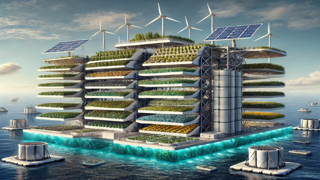
Combining renewable energy, seawater purification and hydroponic agriculture, these remarkable structures are designed to create self-sustaining farms at sea , producing fresh food while using minimal land, fresh water, or chemicals.
For sailors, yacht owners and coastal communities, it may represent the beginning of an entirely new maritime landscape.
Farming the Ocean
The concept is deceptively simple but technologically sophisticated.
Floating agricultural platforms are anchored offshore and equipped with enclosed greenhouse domes where crops are grown using hydroponics , a system that allows plants to grow without soil.
Instead of traditional irrigation, the system works by:
• Purifying seawater through desalination
• Using solar panels and renewable energy to power the facility
• Recycling water and nutrients within a closed-loop growing system
The result is a farm that can operate almost entirely independently of land-based resources.
Fresh vegetables, herbs, and even fruits can be produced year-round ,right in the middle of the ocean.
A Natural Fit for Maritime Nations
For a country like Norway, surrounded by coastline and renowned for maritime innovation, the concept feels like a natural evolution.
The nation already leads the world in offshore engineering, aquaculture, and sustainable energy. Applying that expertise to agriculture opens fascinating possibilities.
Floating farms could:
Reduce pressure on land-based farming
Supply fresh produce to coastal cities
Operate near ports and island communities
Produce food with dramatically lower water consumption
In some designs, the platforms could even integrate fish farming and seaweed cultivation, creating complete marine food ecosystems.
What This Means for the Sailing World
For sailors and the global yachting community, floating agriculture may soon become a familiar sight.
Imagine cruising along a coastline and encountering elegant glass domes rising from the sea — not resorts or research labs, but fully functioning farms.
These structures could one day supply:
Fresh produce to marinas and island resorts
Sustainable food to cruise ships and yachts
Local markets in coastal regions